
Beneath
the Mountain
Ceramic installation
Dimensions variable
A brick as a
unit of memory.
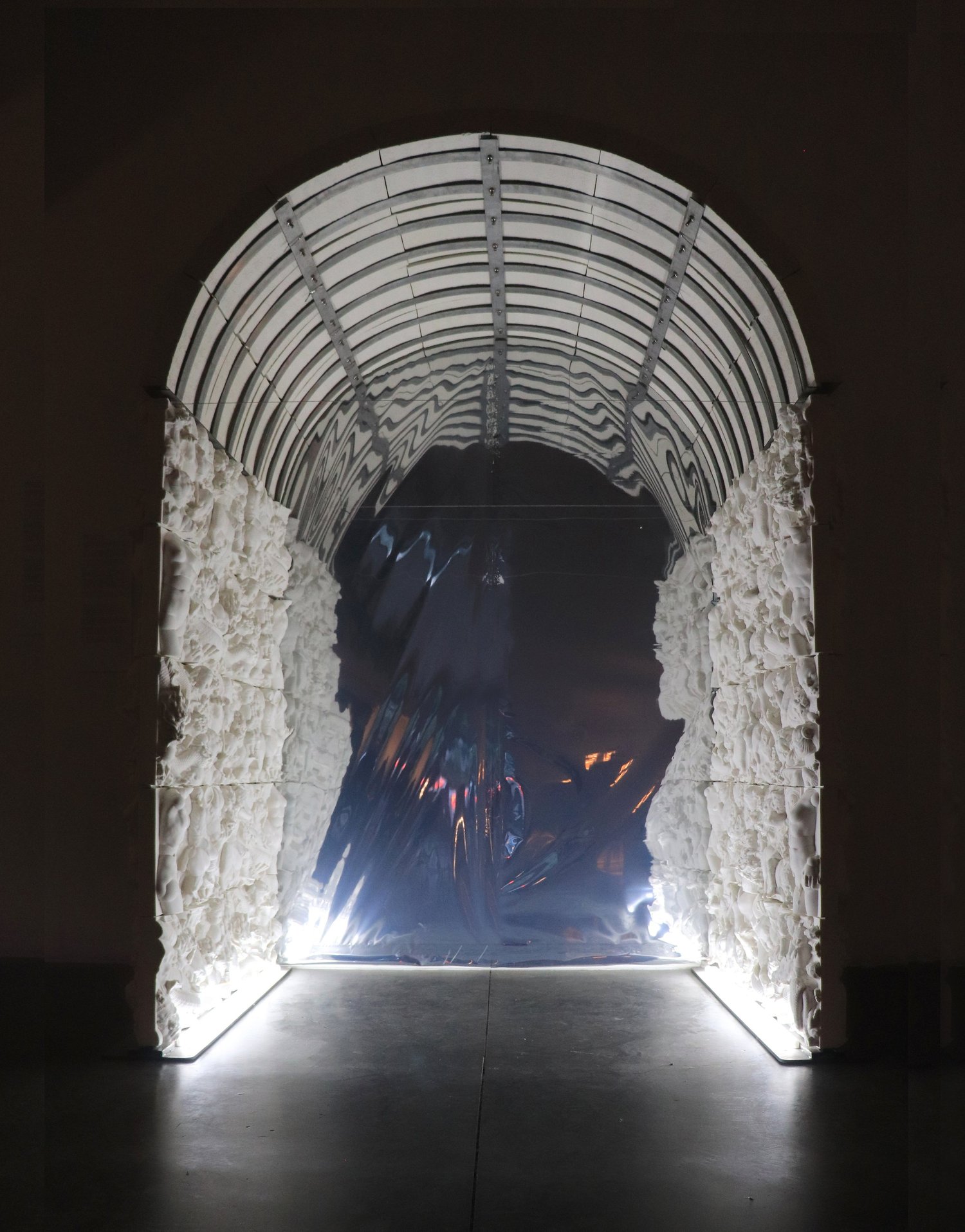
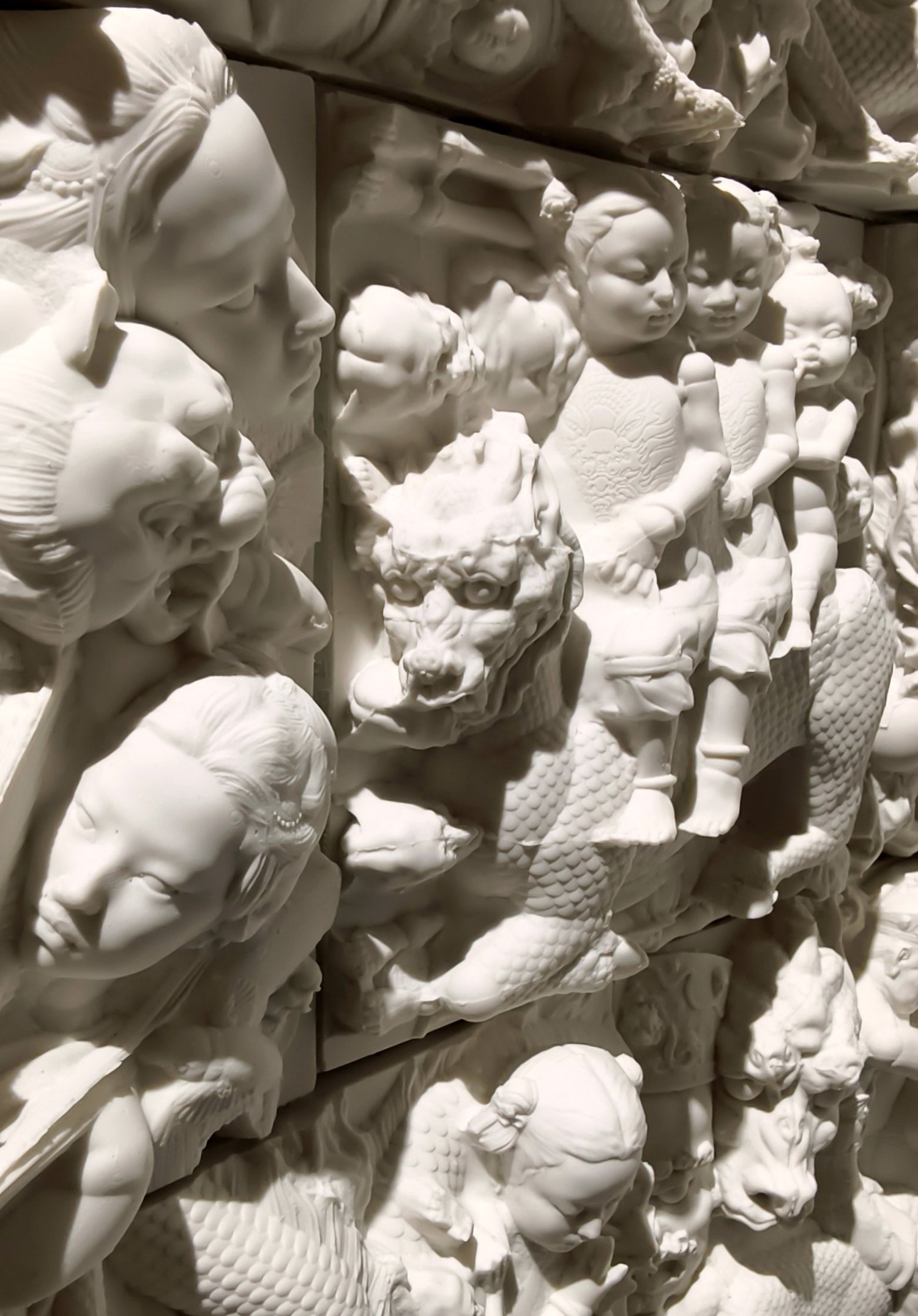
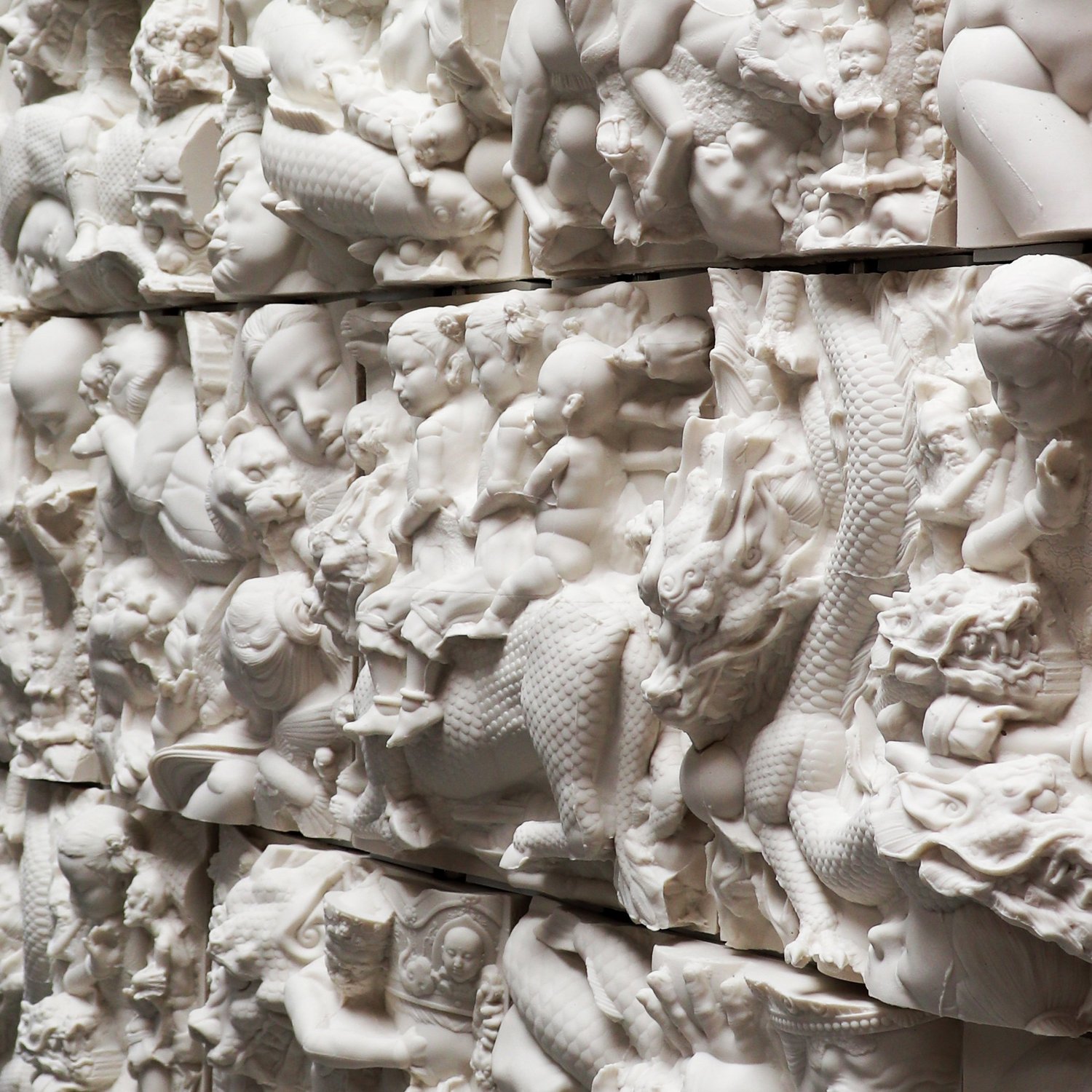
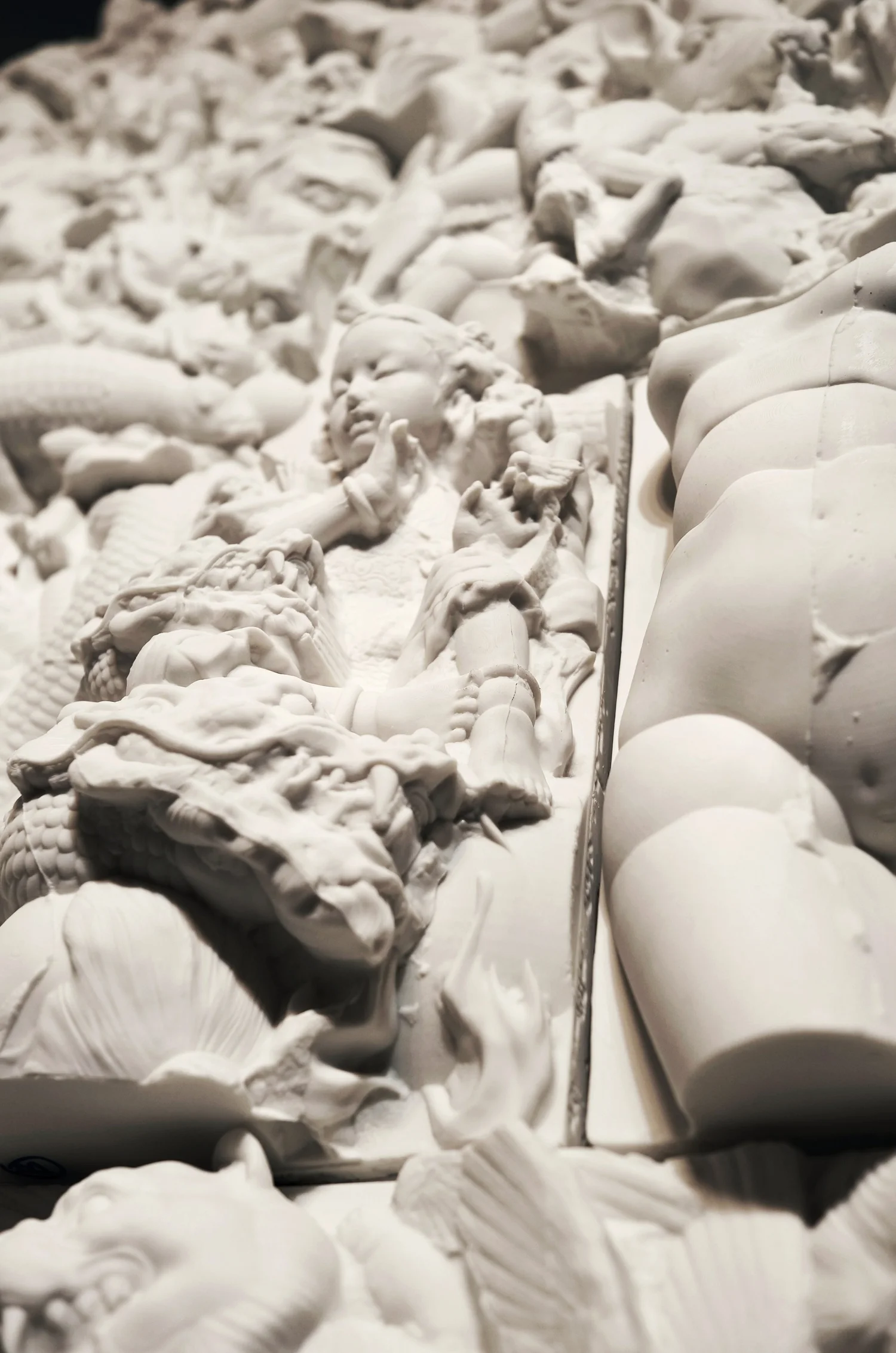
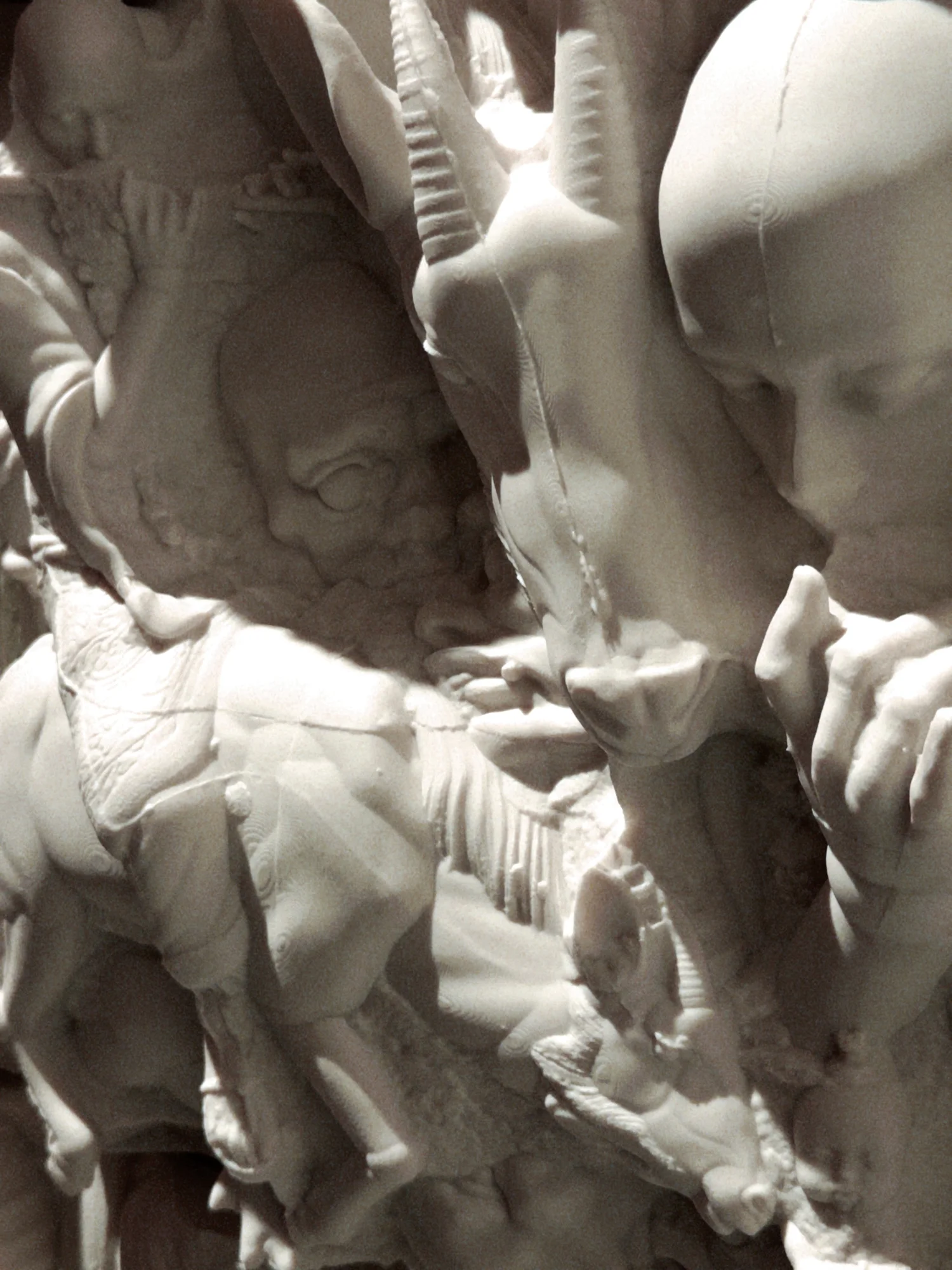
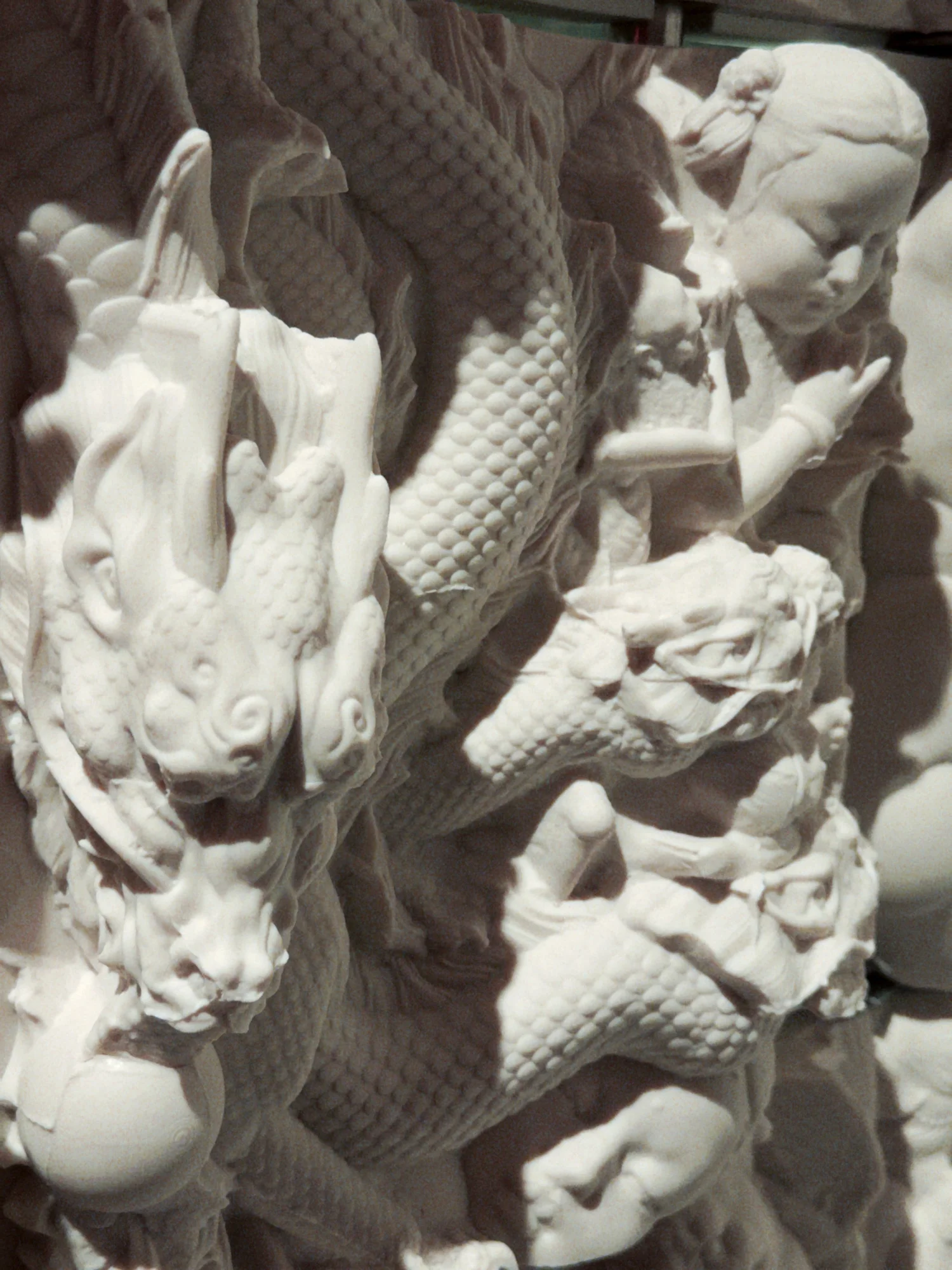
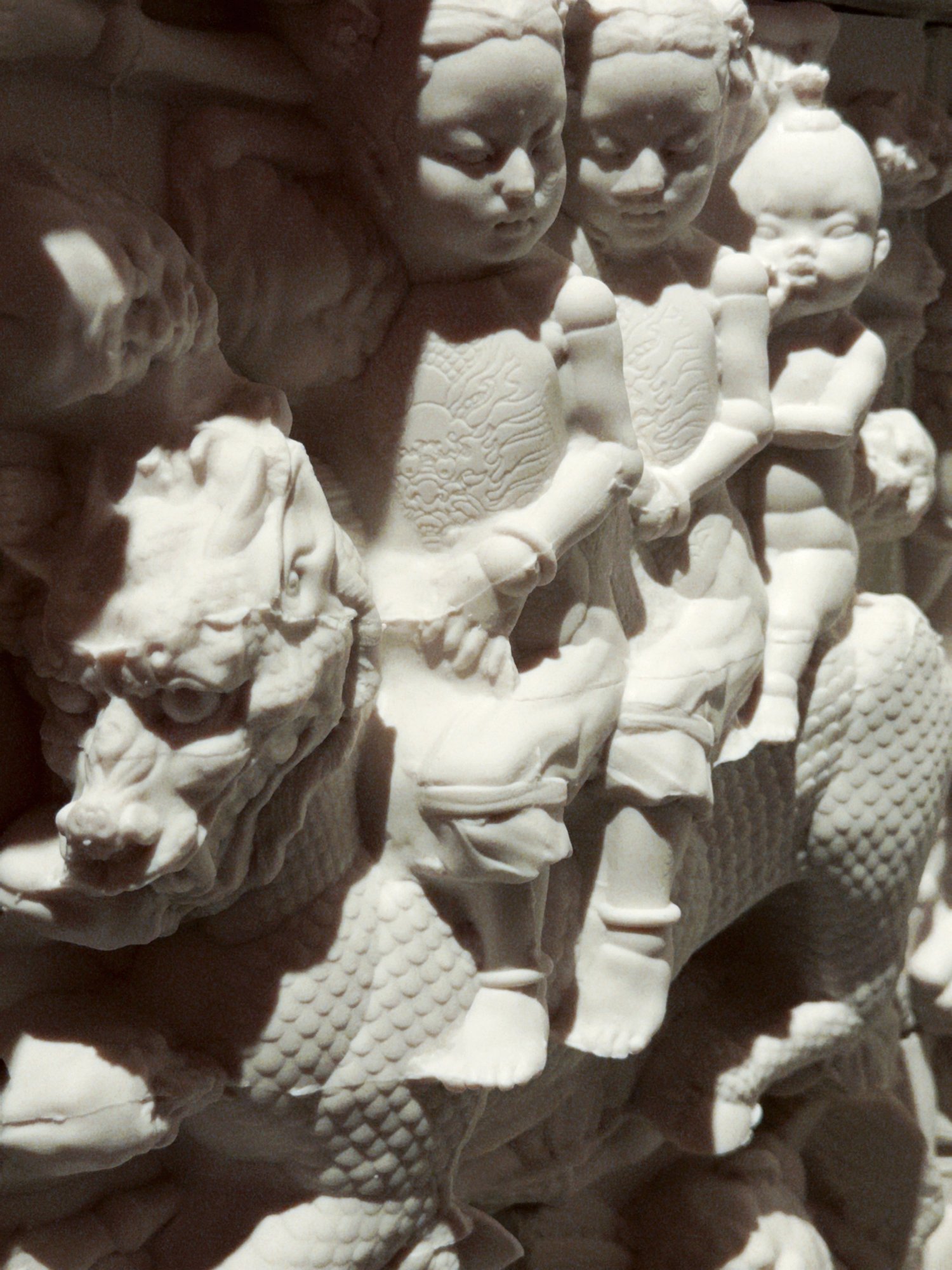
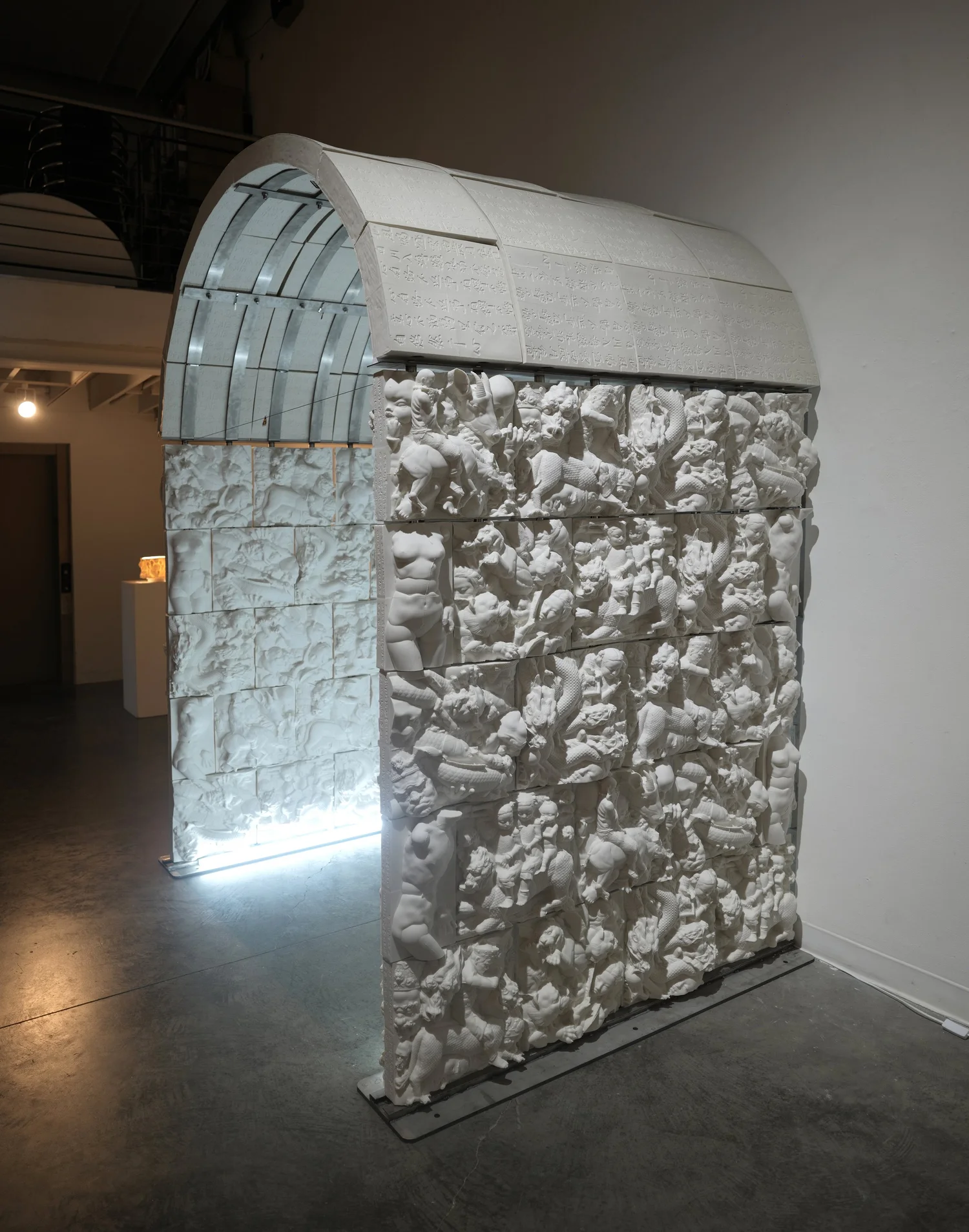
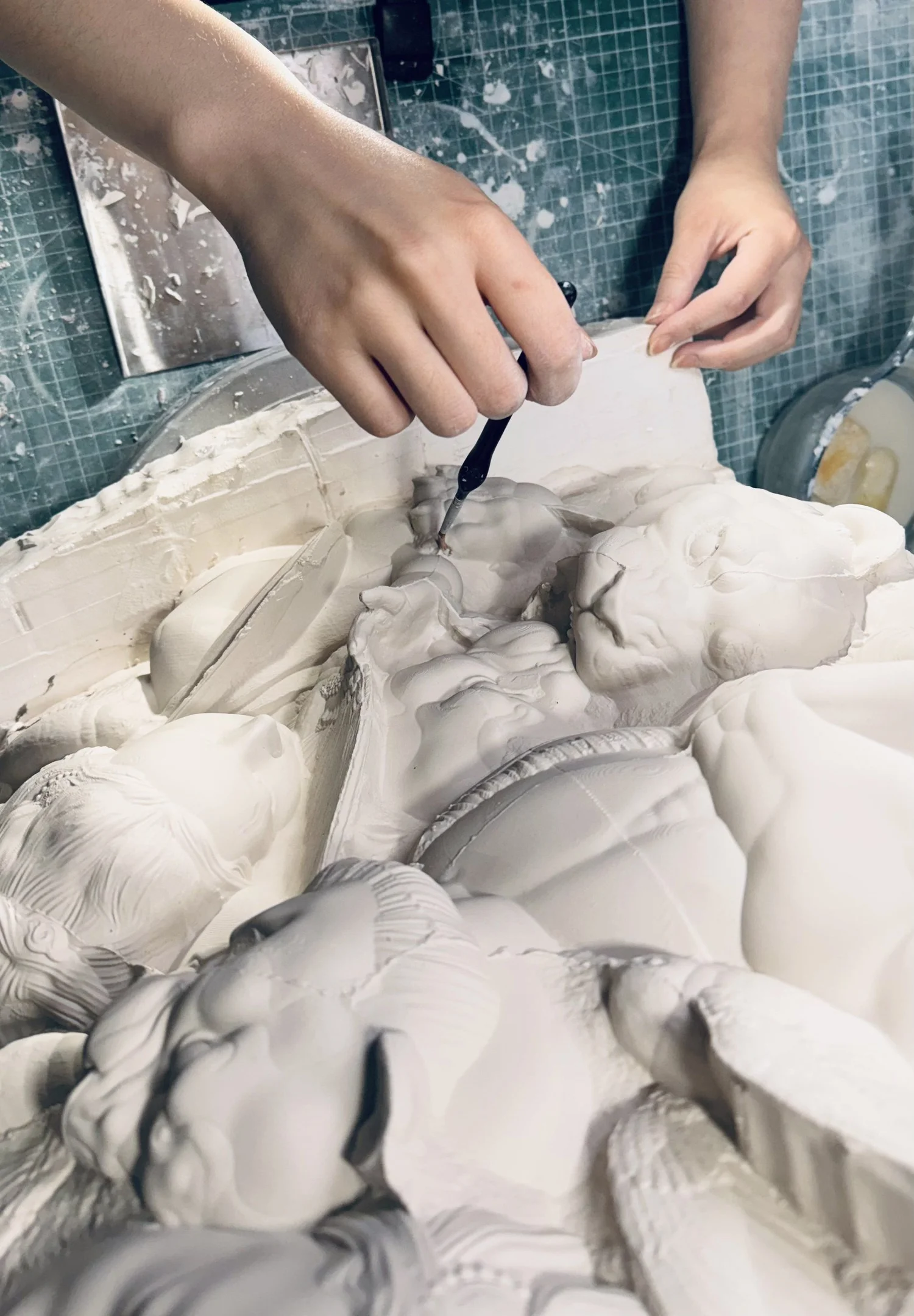
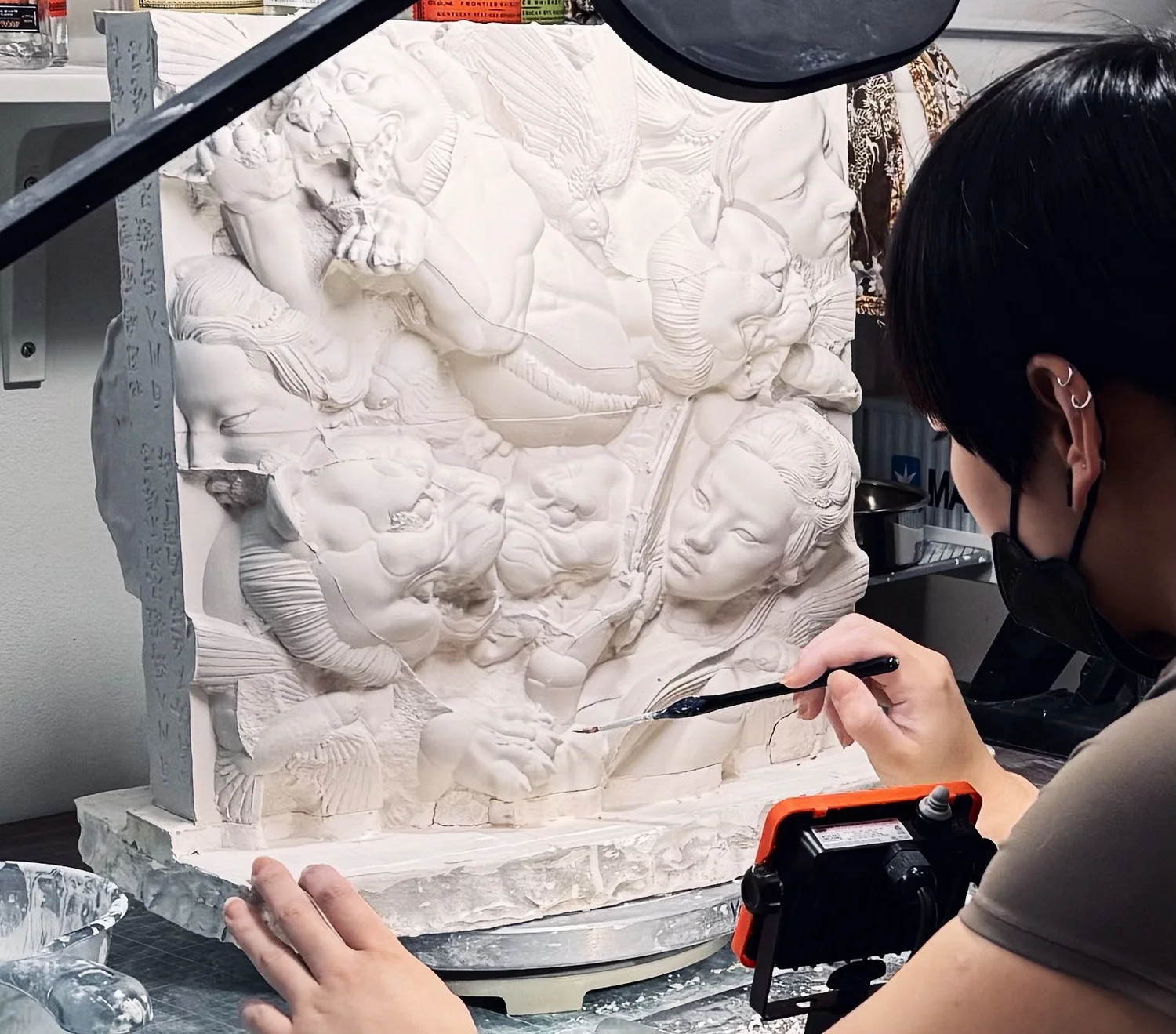
Beneath the Mountain is an ongoing ceramic installation composed of individually sculpted and cast ceramic bricks. Faces and fragments of human figures emerge from the surfaces of the bricks, appearing partially buried, eroded, or preserved within the structure.
The work draws from the architecture of Chongqing, China, the mountainous city where I was born, as well as from ancient Chinese sculpture, archaeological sites, and the air-raid shelters embedded throughout the city’s mountains.
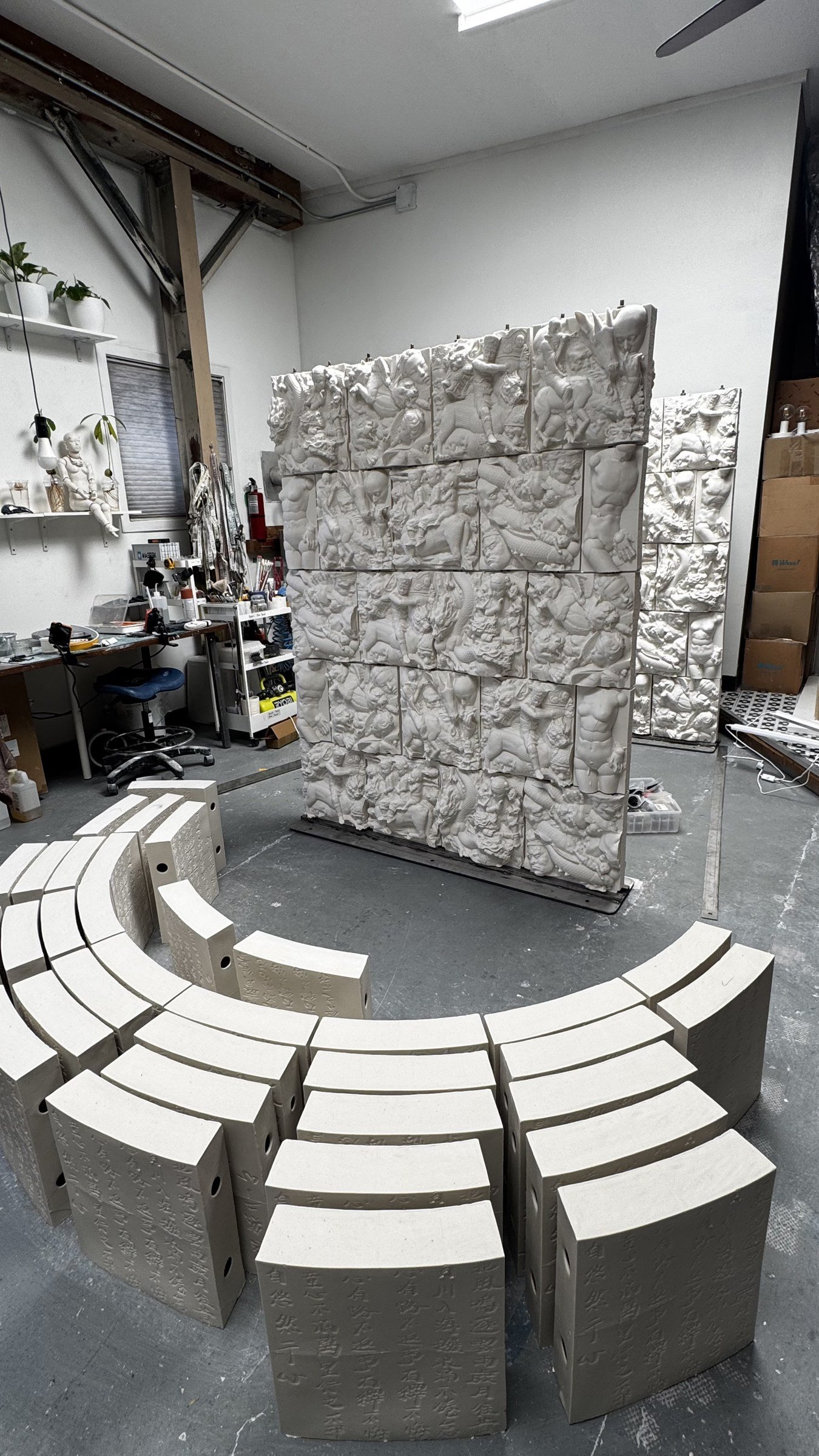
Rather than treating the brick simply as a building material, I use it as a unit of memory. Each brick carries a trace of a body, while the accumulation of hundreds of individual units transforms those fragments into a larger landscape.
Beneath the Mountain was first realized as an installation in 2026 and continues to expand. I am currently developing the work toward a larger scale, allowing the structure to become increasingly architectural and immersive.
Family memory
Shanxi, China
Histories held
beneath everyday life.
I was born in Chongqing, a city built inside mountains. Growing up, climbing was simply part of daily life. My path to school ran up long stone staircases, and beneath the city were networks of air-raid shelters carved into the mountains.
For years, I understood those shelters simply as part of the landscape. Their history became personal to me through the story of my grandmother.
My grandmother survived the bombing of Chongqing during World War II. She was a child then. During the air raids, people crowded into underground shelters, sometimes so densely that it became difficult to breathe. My mother told me that one day, when the sirens sounded again, my grandmother refused to go. She stayed home, lay down on her bed, and thought: If I die, I die.
She survived.
I never had the chance to know her. She died when I was one year old, so my relationship with her exists almost entirely through my mother's memories.
Years later, while visiting a temple in Shanxi, I stood before an ancient clay sculpture of the Ghost Mother. What stopped me was not the sculpture's form, but her gaze. There was an unexpected tenderness in her face—the expression of a mother looking at her child.
I suddenly thought of my grandmother.
It was strange to recognize someone I could not actually remember in the face of a centuries-old sculpture.
That experience changed the way I thought about historical objects. I began to understand them not simply as artifacts from a distant past, but as containers through which personal memory, collective history, and the present can unexpectedly meet.
This idea became central to Beneath the Mountain.
The ceramic bricks in the installation reference both architecture and archaeology. Human faces appear within them but are never fully revealed. Some emerge clearly; others seem to disappear back into the material. They suggest people whose individual stories have been absorbed into larger structures—families, cities, histories, and landscapes.
For me, the mountain is both physical and psychological. It is the landscape of Chongqing, the shelter that protected people during wartime, and the weight of histories that remain beneath everyday life.
As I continue expanding Beneath the Mountain, I think of the installation less as a fixed sculpture and more as a structure that accumulates over time. Each new brick adds another fragment, while the complete history remains impossible to see at once.
Unfinished
by design.
My process combines traditional ceramic and sculptural techniques with digital fabrication.
I begin by sculpting and developing individual forms and fragments of the human figure. Mold-making and digital tools, including 3D modeling and 3D printing, allow certain forms to be repeated and transformed across multiple ceramic bricks.
Each ceramic element is then produced, fired, and finished individually. Variations created during fabrication and firing prevent the repeated forms from becoming identical.
Installation is another stage of the making process. The individual bricks can be reorganized into different architectural configurations depending on the site. Rather than functioning as a permanent wall, the structure can grow, contract, and change.
This modular system allows Beneath the Mountain to remain unfinished by design. I plan to continue producing bricks and expanding the installation so that the relationship between the human body and architecture becomes increasingly physical.
Yoyo Hu 胡悠悠
Yoyo Hu is a Chinese-born sculptor and installation artist based in the United States. Born in Chongqing, China, she studied oil painting at Sichuan Fine Arts Institute before shifting toward sculpture and later continuing her studies in the United States.
Her practice combines ceramics, sculpture, mold-making, 3D modeling, and digital fabrication. Drawing from Chinese historical sites, ancient sculpture, architecture, family memory, and her experience of living between China and the United States, Hu explores how personal and collective histories survive through material objects.
Ceramic bricks have become a recurring element in her installations. Referencing architecture, archaeological fragments, and the Great Wall, these modular forms allow her to construct environments in which individual human traces accumulate into larger structures.
Her recent work examines memory, displacement, cultural belonging, and the ways history continues to inhabit the present.
Visit the artist’s main website